
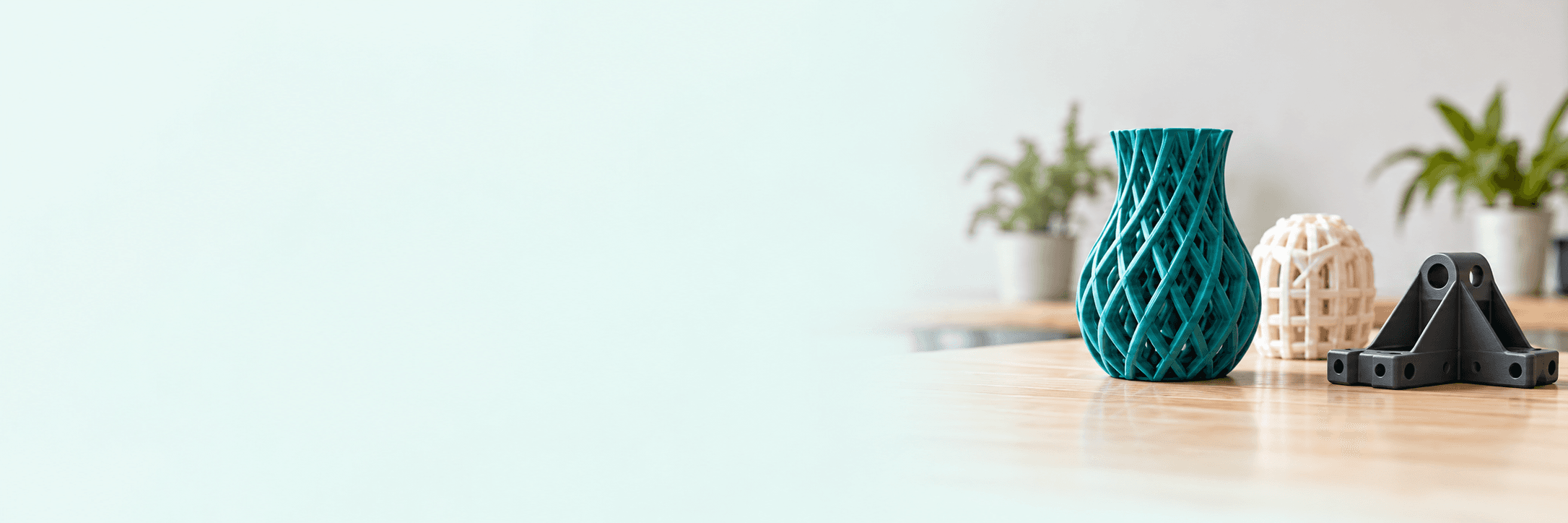
Also called: Filament printing, FFF
FDM printing (fused deposition modelling, also called filament printing) melts a strand of plastic and lays it down layer by layer, like a very precise hot glue gun. It's the most common and affordable kind of 3D printing, and it works with the widest range of materials.
Good for
- Prototypes and test fits
- Functional parts, brackets, and replacements
- Cosplay props and large pieces
- Gifts, decor, and everyday items
How it works
- You upload your 3D file or describe what you need.
- The shop picks a material, strength (how solid the inside is), and layer height (finer layers = smoother, but slower).
- The part is printed, supports are removed, and it's cleaned up.
- Optional finishing, such as sanding or painting, is done if you ordered it.
Pros and cons
Pros
- Lowest cost per part
- Huge choice of materials and colours
- Good for large parts
- Strong, practical parts
Cons
- Visible layer lines
- Less fine detail than resin
- Overhangs may need supports that leave small marks
Questions to ask the shop
- Which material do you recommend for my use?
- What layer height and infill (inside strength) will you use?
- Can you print it in one piece, or will it be split and joined?
Common materials
PLA · PETG · ABS · ASA · TPU · Nylon (PA)
Common questions
How long does FDM printing take? Small parts can print in an hour or two; large or detailed parts can take a day or more. Shop turnaround also depends on their queue.
What is infill? The inside of most prints is a honeycomb-like pattern rather than solid plastic. More infill means a stronger, heavier part that costs more.
Related services
Resin printing · Large-format printing · Multi-colour printing · Sanding and finishing
Find fdm printing near you
Find shops offering fdm printing near you, or upload your file for a quote.